


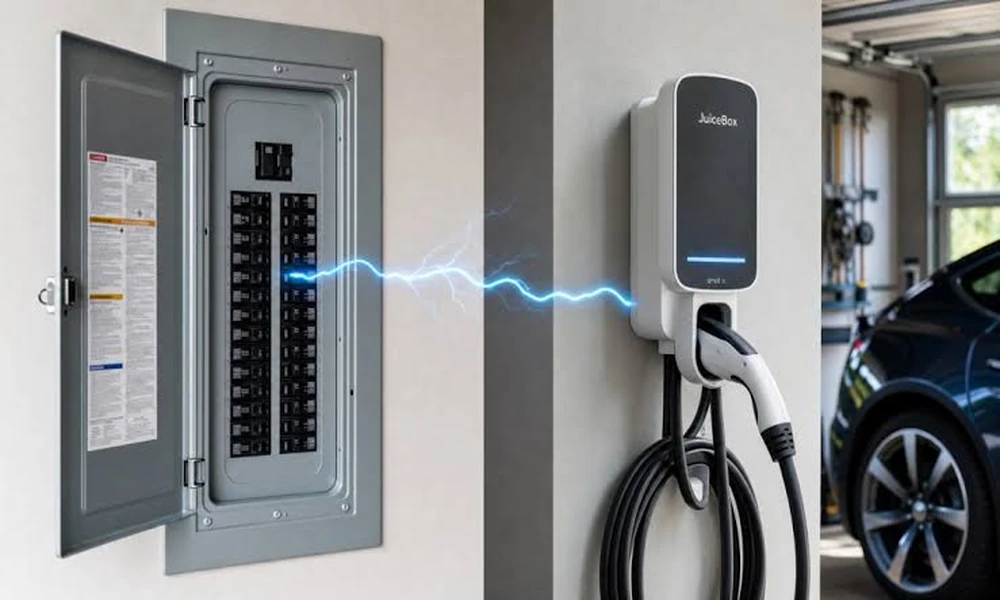
Most people shop for an electric vehicle by comparing range, price and how the cabin feels on a test drive. Very few open the gray metal door in the basement before they sign the paperwork. Yet that panel, and the wiring behind it, often decides whether charging at home is effortless or crawls along overnight.
Many North Jersey houses were built between the 1950s and the 1980s, and their electrical service was sized for a refrigerator, a few window units and maybe an electric dryer. Homeowners around Morristown, Parsippany, Denville and nearby towns who want that capacity checked before buying a charger can reach out to Triple A Electrical, a locally owned residential contractor that handles EV charger installation, panel repair and replacement, and whole home electrical inspections.
Capacity problems are more common than most buyers expect. A survey by the Electrical Safety Foundation found that 65 percent of EV owners had to upgrade their electrical panel when they installed a charger, and 63 percent had a site inspection first. Those numbers show why planning matters more than which charger brand you pick.
Two Charging Levels, Two Very Different Experiences
Every EV comes with a cord that plugs into a regular 120 volt outlet. This is Level 1 charging. It adds only a few miles of range per hour, which is enough for a plug-in hybrid or a short commute, but not much else.
Level 2 runs on 240 volts, the same type of power an electric dryer or range uses. Depending on the car and the charger, it usually adds somewhere between 20 and 40 miles of range per hour. A nearly empty battery can be full again by morning.
New Jersey winters make the gap bigger. Cold batteries charge more slowly and lose range faster, so a Level 1 setup that kept up in September can fall behind by January. That’s why most EV owners eventually ask for a 240 volt circuit, and that’s when the panel comes into question.
What 100 Amps Really Means
A home’s service rating, often 100, 150 or 200 amps, is the total current the house can safely draw at once. Everything you use at the same time adds up: the furnace blower, central air, an electric water heater, a well pump, the oven at dinnertime.
An EV charger is different from most appliances because it can run at full output for hours. Electrical code treats it as a continuous load, so the circuit has to be sized at 125 percent of what the charger draws. A charger set to 32 amps needs a 40 amp breaker. A 48 amp unit needs 60 amps.
On a 100 amp service that already powers central air and an electric range, a 60 amp circuit can push the calculated demand past what the service can handle. Electricians work this out with a load calculation under the National Electrical Code. One accepted method uses a full year of the home’s actual peak demand from utility records instead of estimates, which sometimes shows there’s more room than expected.
What a Pre-Install Assessment Usually Covers
A proper assessment goes beyond reading the number on the main breaker. An electrician typically looks at:
- The service size and the panel’s rated capacity on its label
- Whether there are open spaces for a new double-pole breaker
- The panel’s brand and condition, since some older equipment, such as Federal Pacific Stab-Lok and Zinsco panels, has a history of breakers that may not trip when they should
- Grounding and bonding, which older homes sometimes lack or have only partially
- The distance and route from the panel to where the car is parked
That last point affects cost more than people expect. A panel in the garage next to the parking spot is a short, simple job. A panel on the far side of a finished basement may need wire fished through walls or run along the exterior.
Options Short of a Full Service Upgrade
A full service upgrade isn’t the only answer anymore. Replacing a 100 amp service with 200 amps usually means coordinating with the utility, swapping the meter and service equipment, and waiting for inspections. It works, but it’s a bigger project than many households want.
Load management has become a practical middle ground. Many Level 2 chargers can be set to a lower maximum current, such as 24 or 32 amps. For a driver covering 30 or 40 miles a day, the slower overnight rate still refills the battery easily.
Energy management systems go a step further. They watch the home’s total draw in real time and slow down or pause the charger when the dryer, oven or heat pump kicks on. Smart panels do something similar at the circuit level. Simpler circuit-sharing devices let a charger share an existing dryer circuit and pause charging automatically when the dryer runs.
The electrical code recognizes these systems, so a properly installed load management setup can lower the calculated demand enough to avoid a service upgrade. For older Morris County homes with limited space in the panel, this is often the most cost-effective path.
Small Placement Choices With Long-Term Effects
Where the charger goes matters as much as how much power it gets. Most charging cables are 18 to 25 feet long, so the unit should sit close enough to reach the car’s charge port whichever way you park. Charge ports sit in different spots on different models, and a future car may not match the current one.
Outdoor installations need equipment rated for wet locations, mounted where snowplows and shovels won’t hit it. Inside a garage, keep the unit away from areas where gas cans, paint or other flammable materials are stored.
There’s also the choice between a plug-in charger and a hardwired one. Plug-in units connect to a 240 volt receptacle and are easy to swap later. Hardwired units connect directly to the circuit, which removes a receptacle that can loosen or overheat over years of heavy use. Current code also requires ground-fault protection on many garage and outdoor receptacles, which affects how a plug-in setup is designed.
Two more points are worth thinking about early. If a second EV is likely within a few years, running conduit sized for a second circuit now costs far less than opening walls later. And if the charger relies on Wi-Fi for scheduling or time-of-use rates, make sure the signal actually reaches the mounting spot.
Permits Protect More Than the Wiring
In New Jersey, adding a new 240 volt circuit is electrical work that falls under the state’s Uniform Construction Code. That generally means getting a permit through the local construction office and having the work inspected by the municipal electrical subcode official.
Skipping that step can cause problems later. Insurers may ask questions after a fire or water loss. Home inspectors often flag unpermitted circuits when the house is sold. Some charger manufacturers and utility incentive programs also require proof of a licensed, inspected installation before they honor a warranty or pay a rebate.
The Charger Comes Last
The EV charger is usually the cheapest part of the project to change later, yet it gets the most attention. The panel, the service and the wire running between them are the parts that are expensive to change.
Homeowners who start with an honest look at their electrical capacity tend to pay once for the right setup instead of twice for a quick fix. A useful step before buying any hardware is to note the main breaker rating, list the large appliances that run at the same time, and decide where the car will park. That gives the electrician what they need for a clear plan.
