


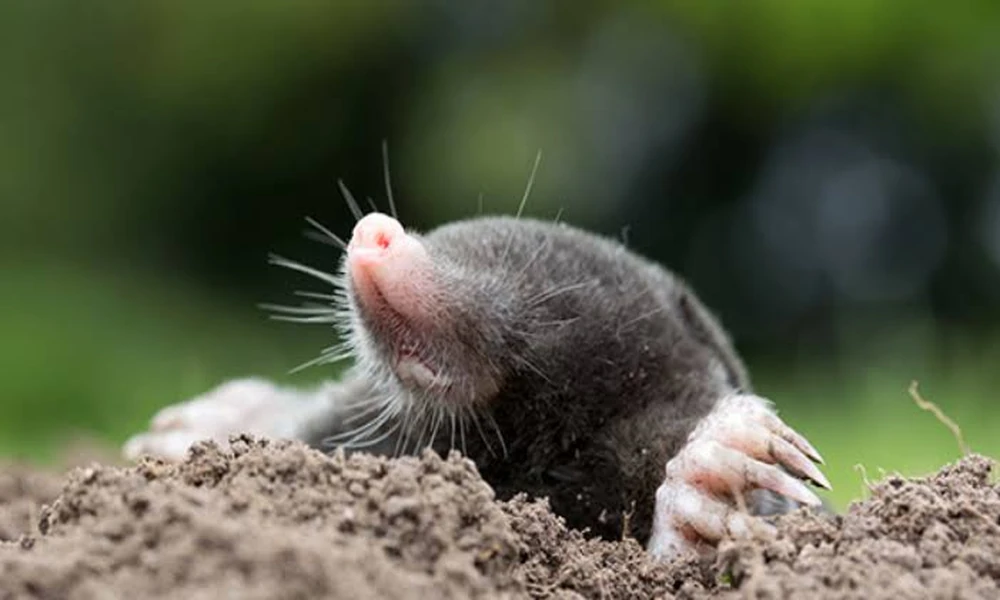
Few yard problems produce as much bad advice as moles. Neighbors swear by chewing gum, hardware stores sell spinning stakes, and the ridges keep spreading anyway. Much of that frustration comes from popular beliefs about moles that do not hold up. Here are seven myths our Kansas City pest control team hears all the time, why they fail, and what tends to work.
Myth 1: Are moles rodents?
No. Moles are insectivores, members of the family Talpidae, and are more closely related to shrews than to mice. The species found across most of Missouri is the eastern mole. This matters because rodent baits and rodent traps are designed around how rodents feed and move, and moles behave differently.
Myth 2: Do moles eat your grass roots and flower bulbs?
No, though this one is easy to believe. Moles eat mostly earthworms, grubs, and other soil insects. When grass browns over a mole tunnel, it is because the tunneling lifted the roots out of contact with the soil, not because the mole ate them. Missing bulbs and chewed roots usually point to voles, which are plant-eating rodents that often use old mole tunnels.
Myth 3: Will killing the grubs make the moles leave?
Usually not. Earthworms make up a large share of a mole’s diet, and a healthy Kansas City lawn has plenty of them. Removing the grubs takes away one food source but leaves the main one in place. Grub treatments are worth doing if grubs are damaging the turf themselves, but they are not a reliable way to get rid of moles.
Myth 4: Does a yard full of tunnels mean a yard full of moles?
Rarely. Moles live alone and defend their territory, and wildlife extension specialists generally note that a typical yard holds only a few at most. One mole can build a large network of feeding tunnels, and the shallow ones it uses once may never be visited again. That is good news: removing one or two moles often ends most of the new damage.
Myth 5: Can gum, mothballs, or sonic spikes drive moles away?
There is little reliable evidence that any of them work. Chewing gum dropped into a tunnel does nothing. Sonic and vibrating stakes have not been shown to keep moles away over time. Castor oil repellents may push a mole to another part of the yard for a while, but they rarely end the problem. Mothballs come with a legal issue as well. They are registered pesticides, and putting them in the ground to repel moles is not a use their labels allow. They can also harm children, pets, and wildlife.
Myth 6: Will flooding or smoking the tunnels get rid of them?
Rarely. A mole’s tunnel system is large and shallow, so water drains away and smoke or gas escapes through the surface ridges before reaching the mole. The mole usually just moves to a deeper tunnel and comes back once the soil dries.
Myth 7: Do moles hibernate, so the problem goes away in winter?
No. Moles stay active all year. In cold weather, they dig deeper below the frost line and their surface ridges become less visible. When the ground thaws and rain brings worms back up in spring, the ridges return.
What actually works, and how can Zip Zap Pest help with Kansas City pest control for moles?
University extension services generally recognize trapping in active tunnels as the most dependable way to control moles. The hard part is finding the tunnels a mole is still using and setting the traps correctly. Mole control is one of the services Zip Zap Pest provides. ZipZap Termite & Pest Control is a family-owned company in Lawson led by Board-Certified Entomologist Jeff Preece, and it is QualityPro certified. It serves lawns across Kansas City and the Northland, and some of its year-round bundle plans include moles.
Why do home remedies for moles keep failing?
Most home remedies fail because they are based on the wrong idea of what moles are and how they live. Moles eat worms, not roots. They usually live alone. They stay active all winter. They are also rarely driven off by smells or sounds. Once you understand that, the solution gets simpler: identify the active tunnels and remove the mole. If the ridges keep spreading despite your best efforts, a Kansas City pest control professional can help you get your lawn back before spring.
